

Spring blessings
April Nature Notes & Wild Spring Food

April Nature Notes
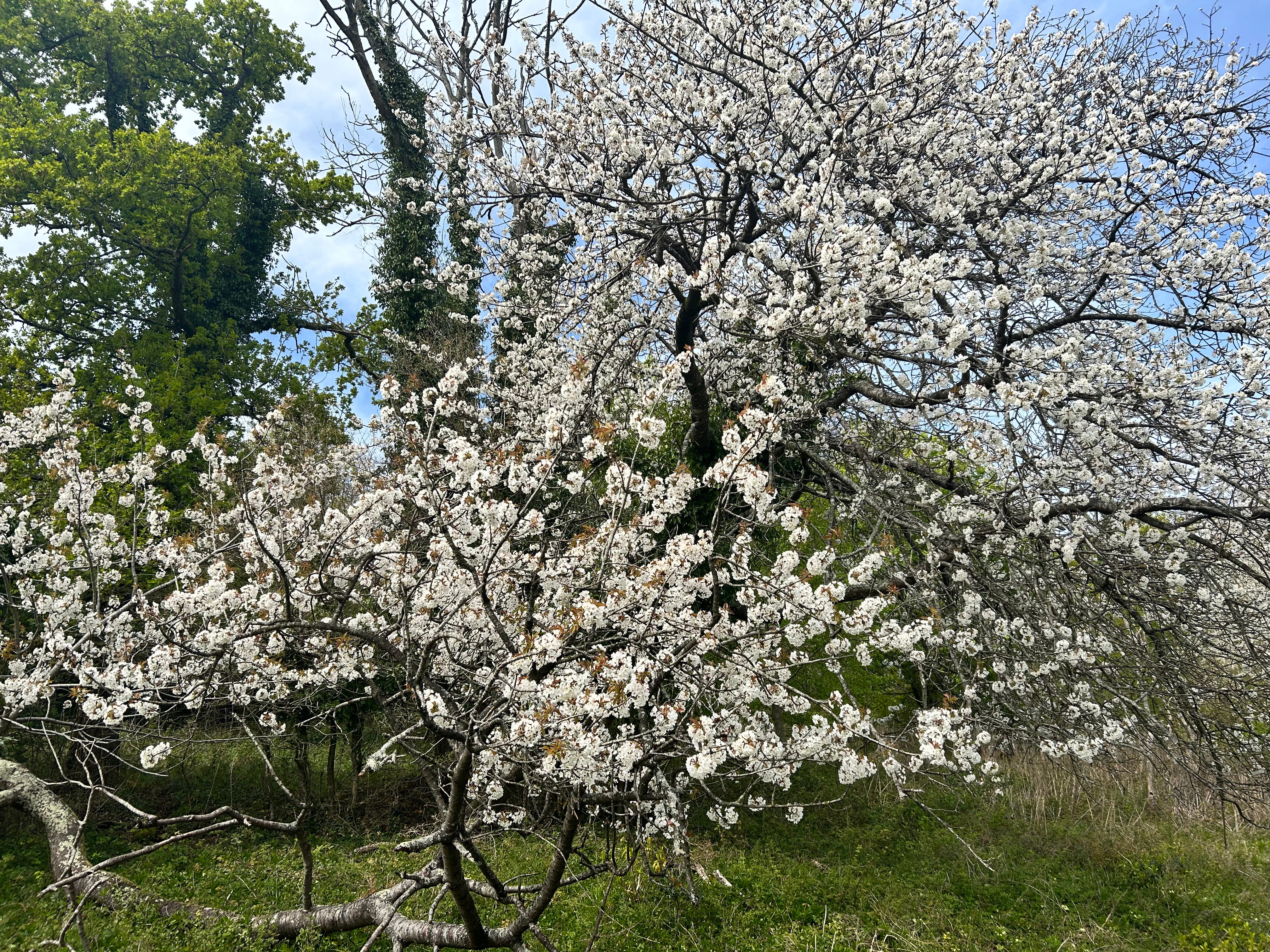
Above : Cherry blossom
Welcome to our latest News.
Wishing you all many spring blessings, however you celebrate may the unfurling joy of spring lift your hearts. The week before last my work with younger people truly has inspired me as they create a world I would certainly like to live in. Away from the negative news the younger generation are doing a wonderful job at breaking down barriers of exclusivity and accepting others, I look forward to the changes they bring when they are in power.
Please find below our April Nature Notes, what an incredible time it has been for both tree blossom and ground flora as well as the sweetly sounding birds. Our notes will be followed by a delicious recipe for a wild food stir-fry. You will also find a story sample with wonderful fiddle music. This is followed by an informative exploration of wild garlic and dandelion.
Next Sunday we shall be starting a new story exploration as we delve deeply into the Gorse Ogham and the lore of the Sidhe. ( For a most incredible exploration of the Sidhe look at the book The Sidhe and oracle cards The Circle of the Sidhe, both by John Matthews).
I hope you can join us:
Next Sunday 27th April Woodland Bard LIVE online 6pm-7pm
In this session we will be exploring the Ogham associated with Gorse and we shall enter into the heart of the tradition as we recite the tales of the Sidhe, the spirits and guardians of the Earth, Sea and Sky.
April Nature Notes
As you enter an ancient woodland in April the atmosphere changes which is reflected in the flora arrayed before you as nettle and bramble lessen and species which need stability and a specialist woodland soil reveal themselves. At this time the white wood anemone carpets the floor with the first of our wild garlic beginning to flower against golden primroses and celandines which carpet the woodland floor whilst cowslips brighten the grassy edges. The white greater stitchwort reaches above the ground cover with a sprinkle of purple wood violets beneath it.
Old oaks begin to close the canopy with newly formed leaves as old hazel stools produce perfectly formed ovate leaves hanging from their shoots. Native bluebells with royal sapphire blue flowers hang from drooping stems as ram-rod straight bugles entice early pollinators.
The speedwell hugs the ground with it’s sky blue flowers under the canopy of the larger wood spurge with it’s characteristic yellowish green outer bracts often mistaken as flower petals.
The shrubbery of hawthorn has vibrant fresh green leaves and the beginning of flower buds beginning to form ready for May time. Our native cherry trees create clouds of white blossom which stand out beautifully amongst the slowly forming leaf canopy whilst the lower blossoms of blackthorn grace the under storey with a pure white majestic display of abundance.
Wild Spring Stir Fry


Pictured above: Crunchy nettle crisps seasoned with celandine roots with a wild garlic leaves and decorated with primrose flowers- delicious!
I've been making a simple stir fry with my students that tastes delicious. Collect a bunch of nettles and wild garlic add some celandine rootlets and sprinkle some primrose and violet flowers on top- filled with goodness and tastes superb. The nettle is crunchy like seaweed, the garlic gives it a zest and the celandine tastes like pine nuts.
You may wish to consider being a paid subscriber which will give you full access to:
Woodland Bard Course - an in-depth study of trees and sacred mythology including monthly LIVE sessions as well as Meditation and story recordings.
Nature articles - detailed nature notes with botanical and poetical insights.
Poetry of Wildflowers Course - Individual plant profiles with informative knowledge of the uses, lore and natural history of our flora.
Story by firelight with Steve Faulkner accompanying the tale with his exquisite fiddle playing accompanying this story.
Poetry of Wildflower Course
Vitality of Ramsons
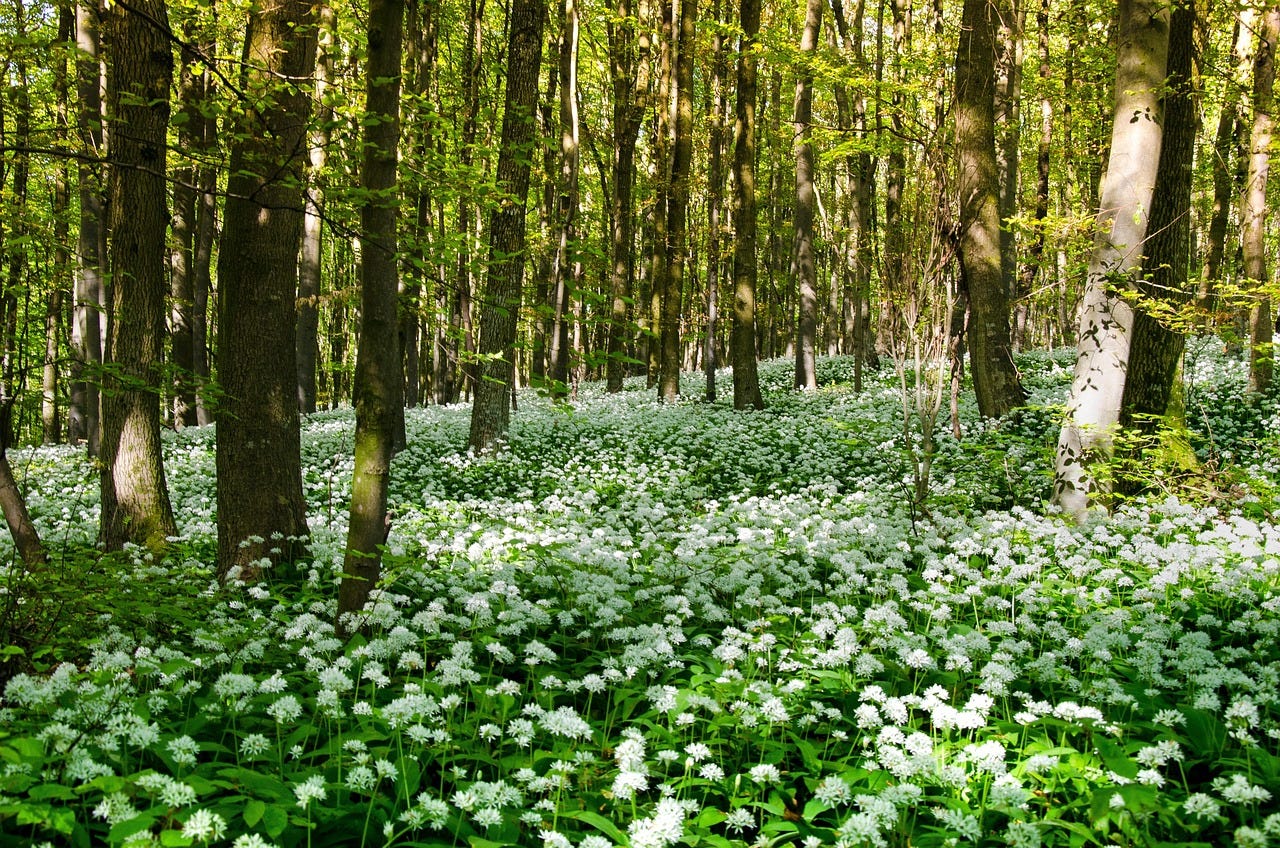
Common Name: Ramsons/Wild Garlic
Latin: Allium ursinum
Family: Alliaceae
Wildlife Value: Green veined Butterflies, long horn beetle and hoverflies amongst others.
Wild Garlic or Ramsons lives underground for much of the year and then its aromatic leaves begin to grow up in March to eventually produce flowers in May. Carpets of green foliage and bunches of starry white flowers create magnificent displays in British woodlands preferring wetter and shadier parts of the wood than the bluebell which also puts on a display in May.
These plants are typical shade-evaders making use of the Forest landscape before the leaves are produced to maximise the light levels. The wild garlic attracts many insects including hoverflies, beetles and butterflies.
'Nature is always lovely, invincible, glad, whatever is done and suffered by her creatures. All scars she heals, whether in rocks or water or sky or hearts.'
John Muir
The lore and uses of wild garlic is immense as both an ancient plant used in spells and folk traditions as well as in medical herbalism. A most striking fact is the faith people put in the plant in 1918 during an influenza pandemic, literally carrying a sprig of this plant for protection in their pockets. It is all too easy to put such acts in the realms of superstition but science indicates the absorption of this plant can actually help cure infections.
In World War Two cultivated garlic was applied to sphagnum moss and used as an antiseptic!
If you have any medical conditions please check with a medical herbalist first before taking any plant and only harvest it if you are 100% sure what it is!
It is also possible to connect with the qualities of a plant and ramsons is full of healing vital energy providing many nutrients with healing tendencies. In Ireland this plant has been used traditionally for tooth ache, inflamed fingers, mumps and swellings.
'nine diseases shiver before the garlic'- Irish proverb
In the West of England they talk of 'eating leeks in March and ramsons in May so that all the year after the physicians may play! '
The plant's properties are considered to also help purify the blood, cure boils and heal sore eyes as well as help many infections as well as sore throats and colds, the list seems endless. In the main the plant was administered by eaten it raw or boiling it in milk to produce a liquid which produced a burning sensation when applied, this made it popular as we seem to believe more in something if a reaction is induced!
We now know that the most effective way to use this plant is to to crush, chew and digest the leaves as then it will release allicin that will act on micro-organisms.
Wild garlic eaten by cows makes their milk undrinkable and maybe this is the origin of its name of ramsons as rams is an older word for 'rank.' The latin name of 'ursinum' comes from the latin word for bear which some may claim means it is only fit to be eaten by a bear or maybe it is referring to the shape of its leaves resembling the ears of a bear?
However this plant is very popular as food flavouring dishes and sauces, it is best to use its leaves as the bulbs can make you feel ill and always be aware that you will kill large quantities of the plant if you trample all over it!
PROSPERITY OF DANDELION
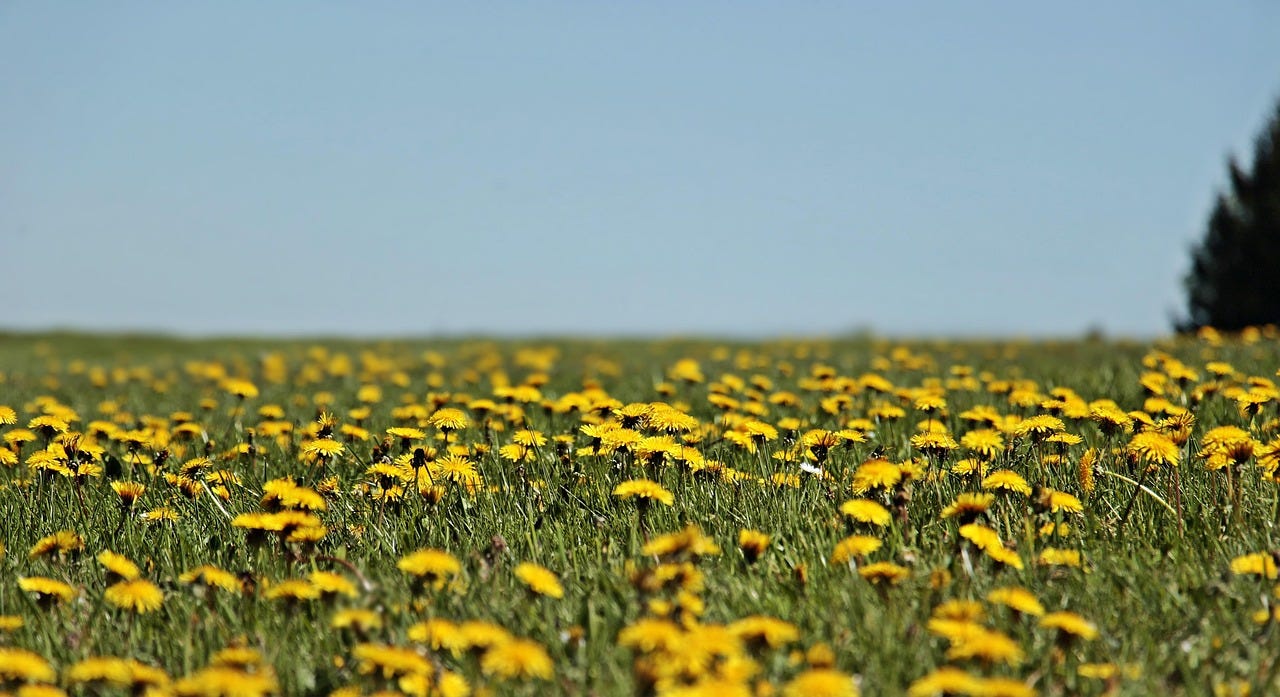
Common Name: Dandelion Latin : Taraxacum officinale Family: Asteraceae (compositae)
History and/or use: Roast roots for a beverage and use leaves for salad. Effective blood purifier.
Wildlife Value: Key nectar source.
The classic folk tale of the Dandelion is of the Leprechaun who hides its gold under the plant. The question therefore is what is the gold in the soil, where do the dandelion roots stretch down to? Dandelion is the quality of connection, it provides one of the early main sources of nectar for our winged delights, its golden flower attracts the nectar seeking insect people. John Muir describes our insects as beautiful winged people waltzing together in pure play and hilarious enjoyment. The gold under the plant is the very essence of life, the soil, minerals and the insects and fungi from which all life stems from. No matter how hard our lives may seem the dandelion implores us to find the gold in the earth and treasure it more than ever!
'Here's the dandelion rhyme: see my leaves with tooth-like edges, blow my clocks to tell the time,
see me flaunting by the hedges, in the meadow, in the lane, pull me up- I grow again.
Asking neither leave nor pardon, sillies, what are you about with your spades and hoes of iron?
You can never drive me out- me, the dauntless dandelion!'
Cicely Mary Barker 1925
If you have any medical conditions please check with a medical herbalist first before taking any plant and only harvest it if you are 100% sure what it is!
The word dandelion is a corruption of the French ‘dent de lion’ which means ‘lions tooth’ referring to the shape of the leaf. Dandelion is yet another common plant which is underrated. In medieval times it was grown as a vegetable and cooked like spinach or it was added to salads. It is rich in vitamins A and C and is a superior diuretic as it replaces the potassium lost in the process.
The leaves are also a strong equivalent to frusemide and can be used for hypertension when dried.
The root can also be used as a vegetable sautéed in vegetable oil and is a powerful liver tonic and coffee substitute. Use the root dried or fresh.
To make coffee dig up your fresh roots, wash and dry them, then bake in the oven for about ten minutes on a low heat. Provided they are not burnt they taste delicious, just add hot water and according to preference some fresh milk.
If you wish to do it over an open fire chop the root up small and flash fry them with no oil.
As a paid subscriber you will have full access to our Poetry of Wildflowers Course with Individual plant profiles that contain informative knowledge of the uses, lore and natural history of our flora.
Thank you. I'm just about to immerse some wild garlic leaves into my casserole for tonight!